Habits are (im)possible to change
Did you know that we always start putting on our shoes with the same foot?
At some point in life, our brain formed a habit of not thinking too long about the “problem of the world” and automatically choosing the same foot. Almost always. Every day. The same foot, without realizing why. We have a large number of such automatic behaviors: simple, complex, physical, conversational, mental. But what if we don’t want to put on our shoes this way, and want to do it differently? Is it possible to change this “automation”, and do we even need to?
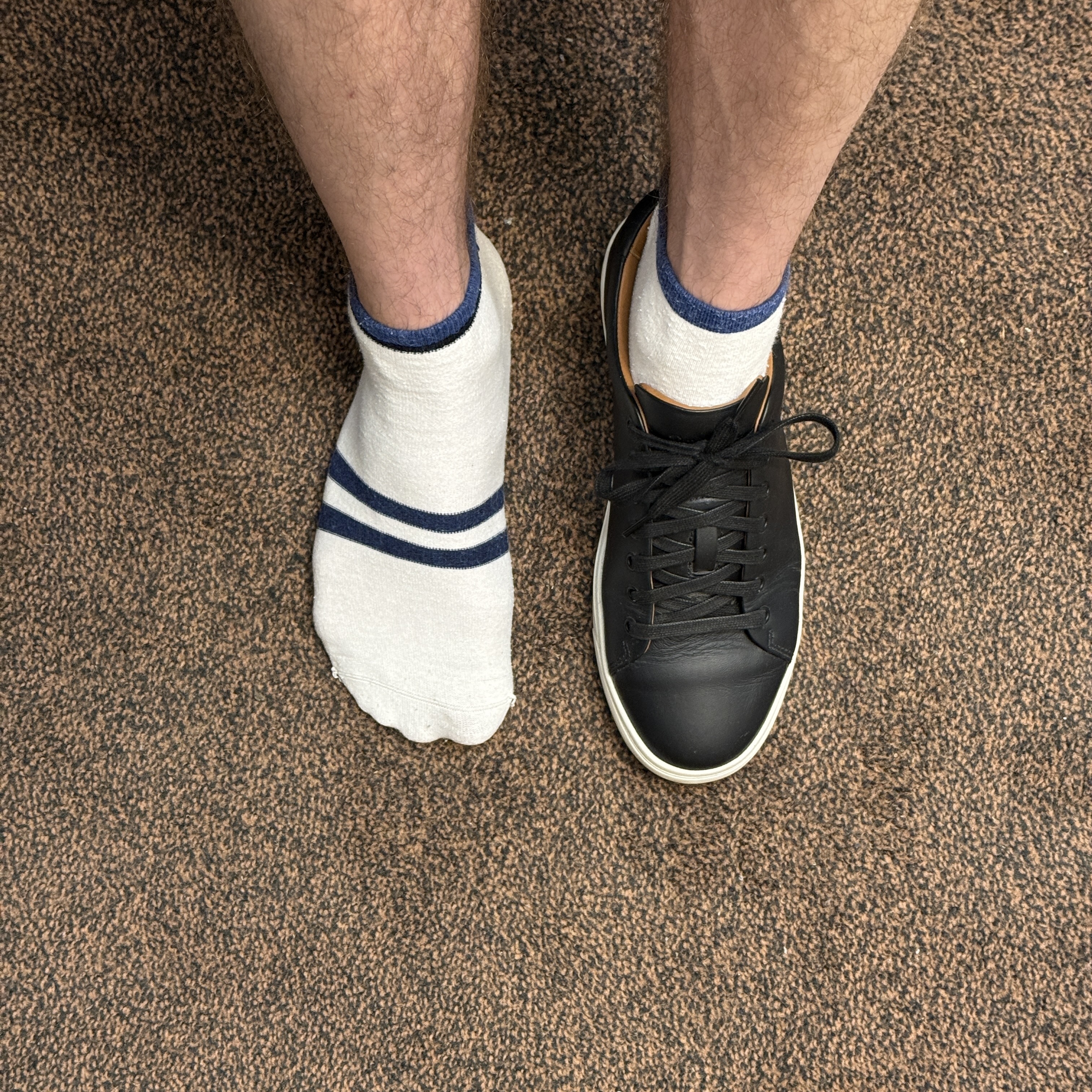
This is how we put them on: first the left, then the right
Recently, I installed a towel hook in the bathroom. I put it to the right of the sink, since both my wife and I are right-handed, so it would be quick and convenient to dry our hands. However, I realized that starting to use the new place for the towel is not the same as getting used to using the new place. I felt the power of habit. Moreover, I sensed that my so-called “conscious self”, meaning my specific thoughts and focus, is quite powerless against a habit.
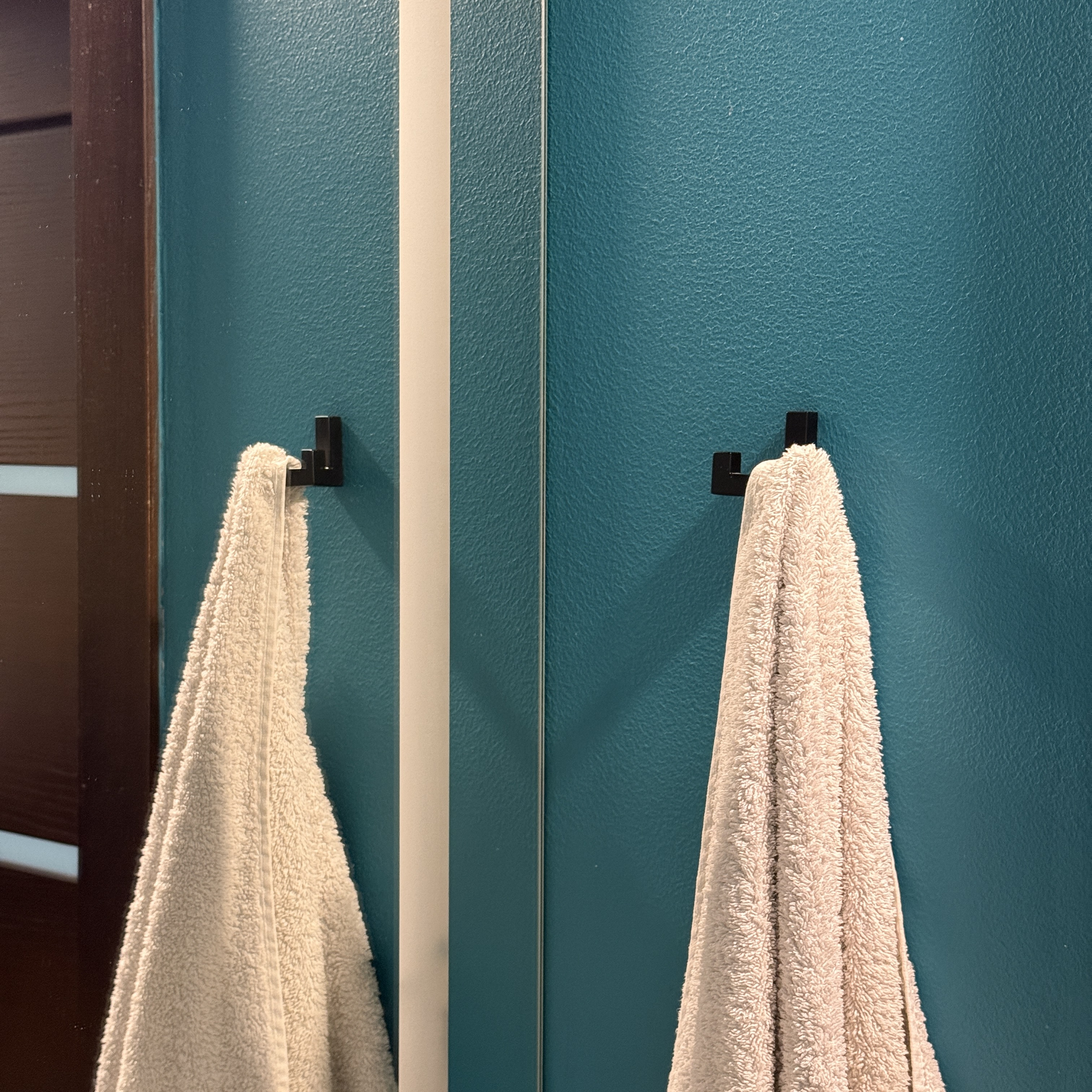
Just a towel hook
Before this hook, the towel had hung for two years on the electric dryer behind me. After I put up the hook, for about two weeks I consciously thought: “don’t turn 180 degrees, the towel is right here on the right” - and yet… I still turned around. Then it took another month to stop automatically turning around without even thinking about it. Sometimes, when I’m in a big hurry, I can still turn to the dryer automatically.
These are just examples of putting on shoes and drying hands - things that aren’t very important. Of course, it’s important to put on shoes and dry our hands, but it doesn’t really matter to us how we do it: left foot or right foot first, with a light towel or a dark one - the result will probably satisfy us either way. But imagine how many thinking and behavioral habits we have in more critical situations, where specific habitual thoughts or behavior can lead to unwanted results.
Automatic thoughts are also habits
A more practical example: when we see a cake we love, our brain motivates us to eat it. It comes up with very convincing arguments about why we should eat this treat right now, like: “I’ll eat it now and honestly promise myself not to eat anything else for three days”, and it doesn’t matter anymore that a week ago we promised ourselves just one treat a week. It seems like there’s a lot of conscious “bad” choice here, but in reality, our associative memory quietly and quickly gives us lots of automatic thoughts, and some have a greater influence on our decision. It may seem we should just get rid of these “automatic habits” and always consciously choose what we truly need, but it’s not that simple. So what are habits?
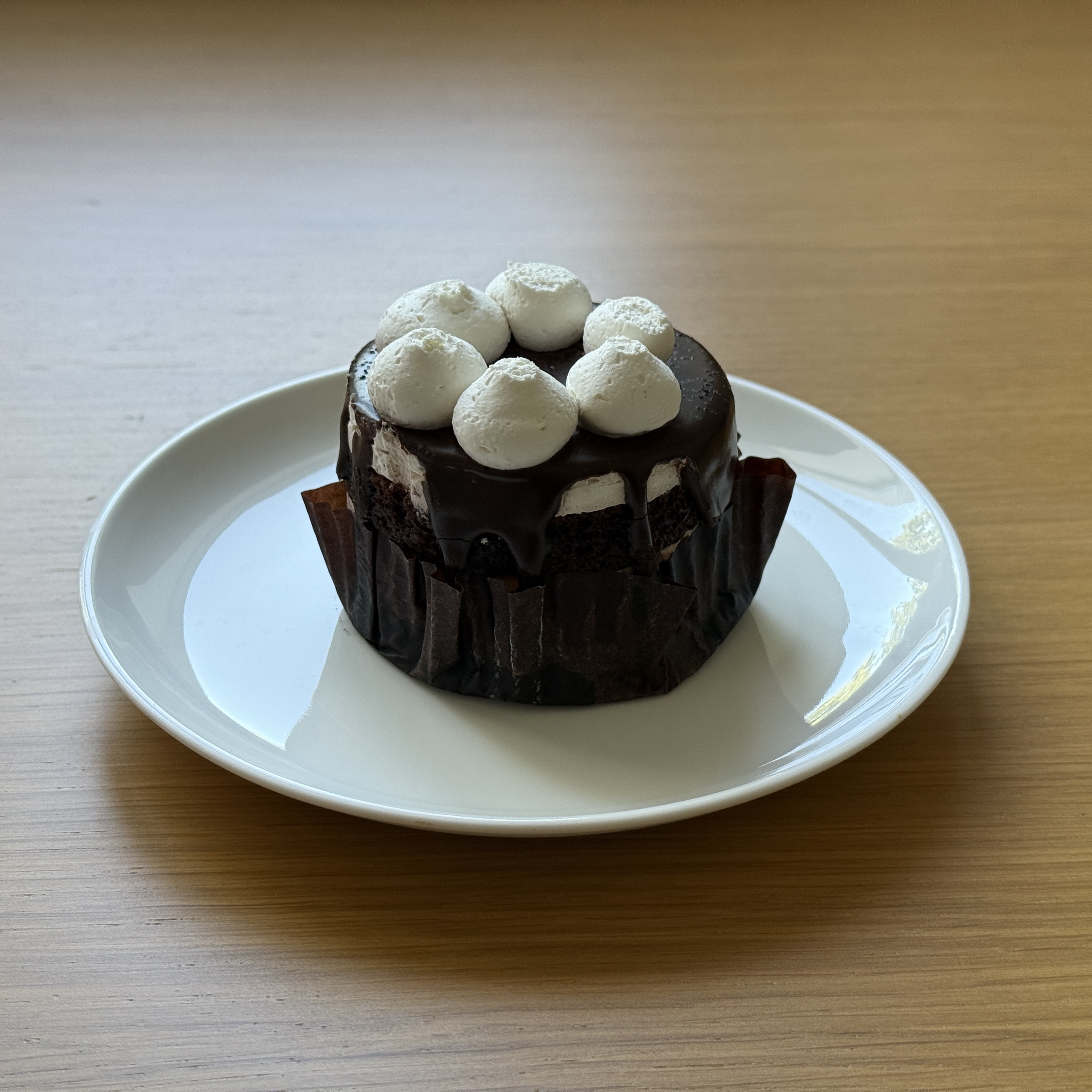
Cake from Silpo
Let me share my definition. Habits are what you already know how to do in order to achieve an expected result. In other words, they are a tool for increasing the “understandable” efficiency of life. Unfortunately, habits don’t understand our higher abstractions like “diet”, “success”, or “meaning of life”, but habits understand simple things: “after situation A, do B to get C, as it has always worked before”.
- Thinking is hard. If you always put your shoes on starting with your left foot, you don’t need to think. We automate putting on shoes without analyzing.
- Thinking is hard. If you immediately turn around and reach out your hands, you don’t need to think. We automate turning and reaching without analyzing.
- Cake has always given you energy. If you need energy, you should eat cake. We crave cake without analyzing.
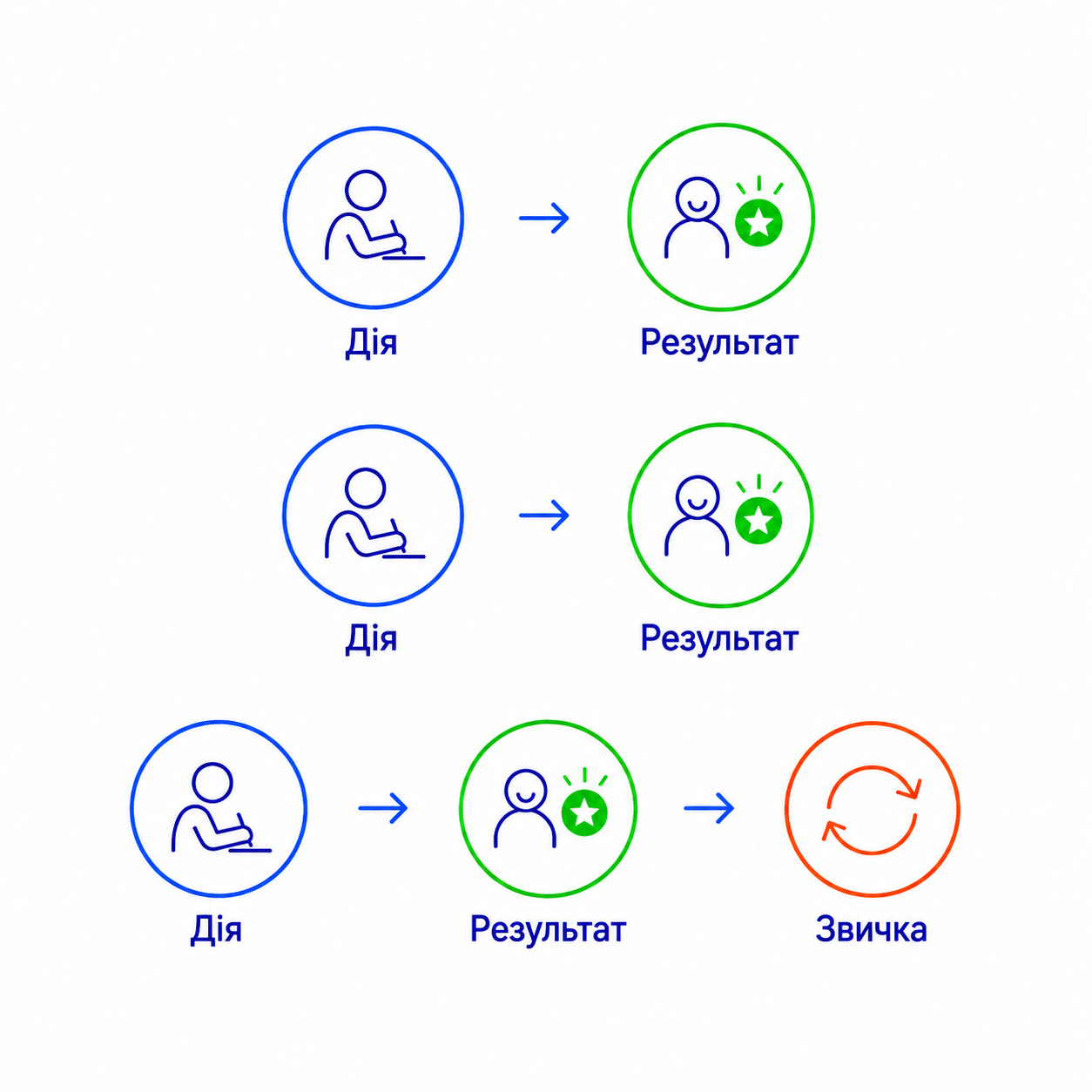
This is how a habit is formed
So habits are not evil. Habits are a tool. Most habits really help us. It is literally easier for us to live without being aware of “which foot I start with when putting on my shoes”. This is the power of our brain - to optimize and simplify this process. At the same time, a tool can be used ineffectively, because “you can also hammer nails with a microscope” (as the saying goes). With a new towel hook in a new place, you just need to retrain your brain for a different habit.
It turns out that you only need to get rid of habits when they interfere or cause harm. In any case, you need to think about what exactly you do automatically, why it happens (the trigger), and what you want to do instead. Simply wanting to “never eat sweets” makes no sense and only brings suffering, but “not eating sweets because you have other ways to gain energy and care about your health” is a completely different story. How do people get rid of unwanted habits?
I have discovered and defined several effective ways to change automatic thoughts or habits. Here are some of them:
- Remove the trigger
- Replace with another
- A bigger goal
“Remove the trigger” is the simplest and probably the most understandable for me. In order not to struggle with wanting to eat cake, you just shouldn’t go into the cake shop. An automatic action is mostly triggered in a certain environment or after a certain action, and if the environment doesn’t exist or the action doesn’t happen, the automation doesn’t work.
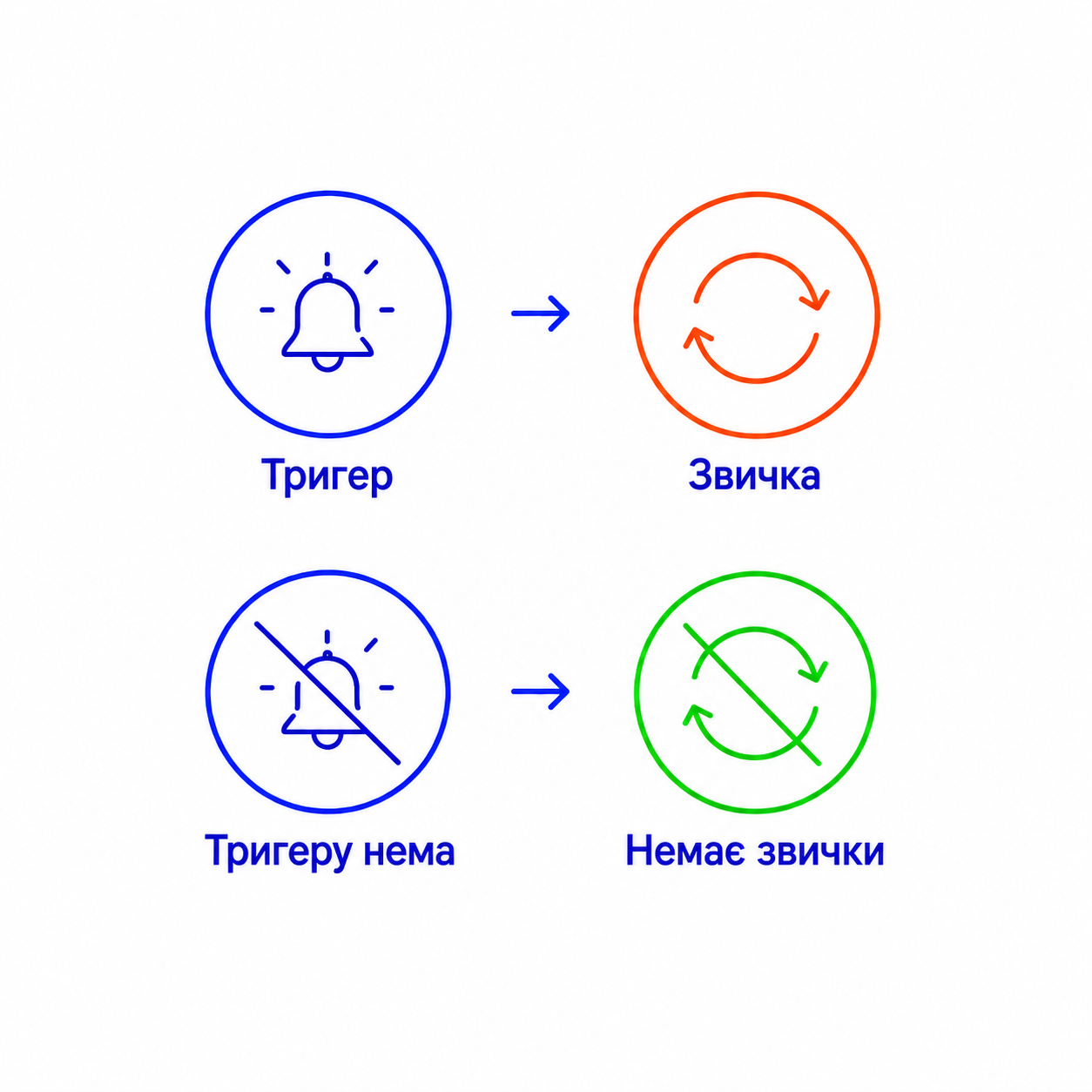
Method 1: Remove the trigger
“Replace with another” is a bit more difficult, because you need to come up with something that can “outperform” the current habit. For example, every time you want to eat an “unhealthy” cake, you can try eating dried fruit instead. Over time, whenever you crave something sweet, you’ll start to want dried fruit instead of cake. It’s very important that the new habit is either easier or more pleasant, because without this, you’ll keep returning to the old habit.
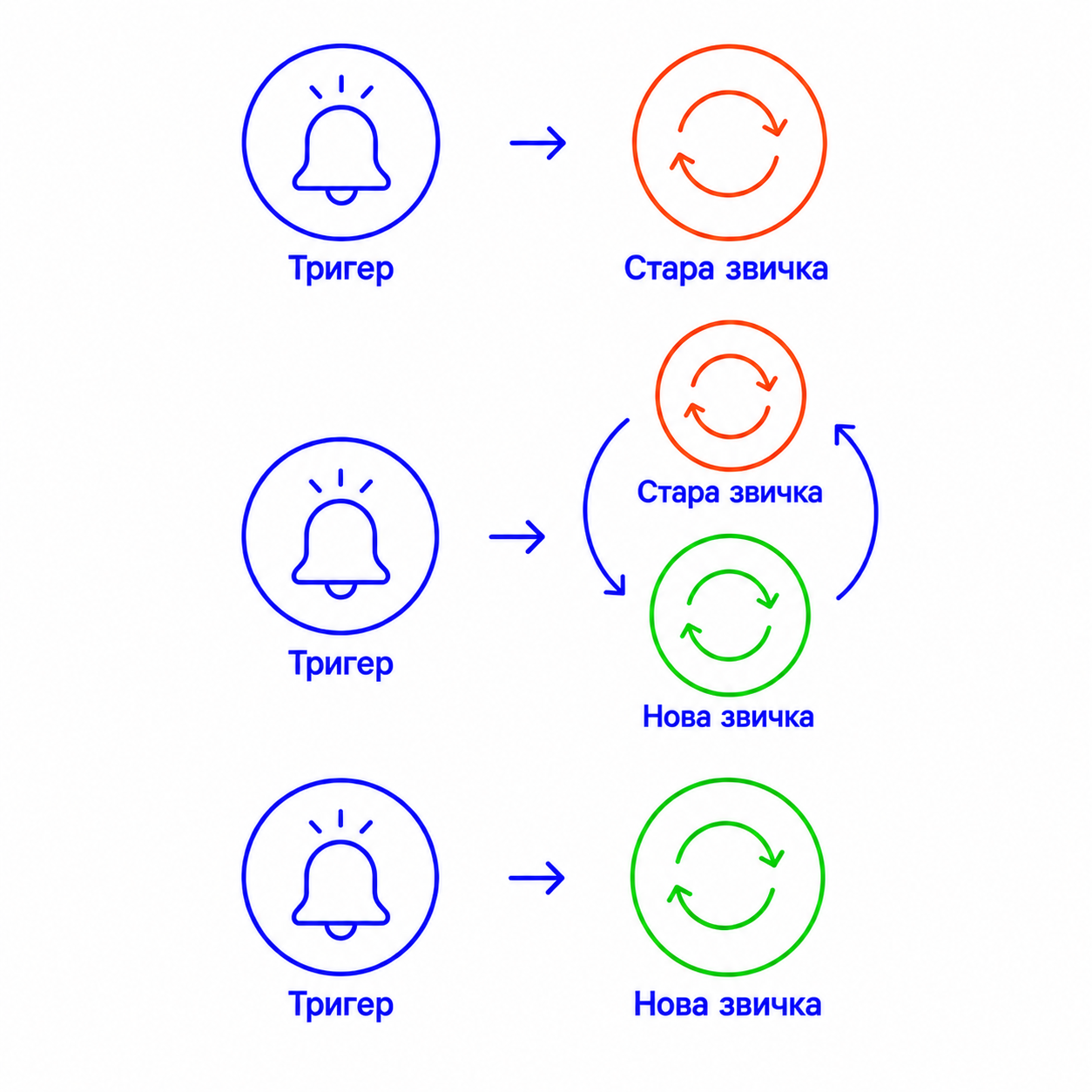
Method 2: Replace with another
“A bigger goal” isn’t so much a method as it is an effective element of long-term motivation and the most difficult of the three. Every time you want cake, you need to remind yourself why you shouldn’t eat it in the long run - specifically, to recall your bigger goal, not just the present moment. You need to say this out loud or write it down somewhere so that new associative connections form. This method is only effective when you have a big goal that is reinforced by your actions - not eating cake. At some point, it will become more important for you to maintain the rhythm of your global goal (the new habit) than to give in to a small weakness.
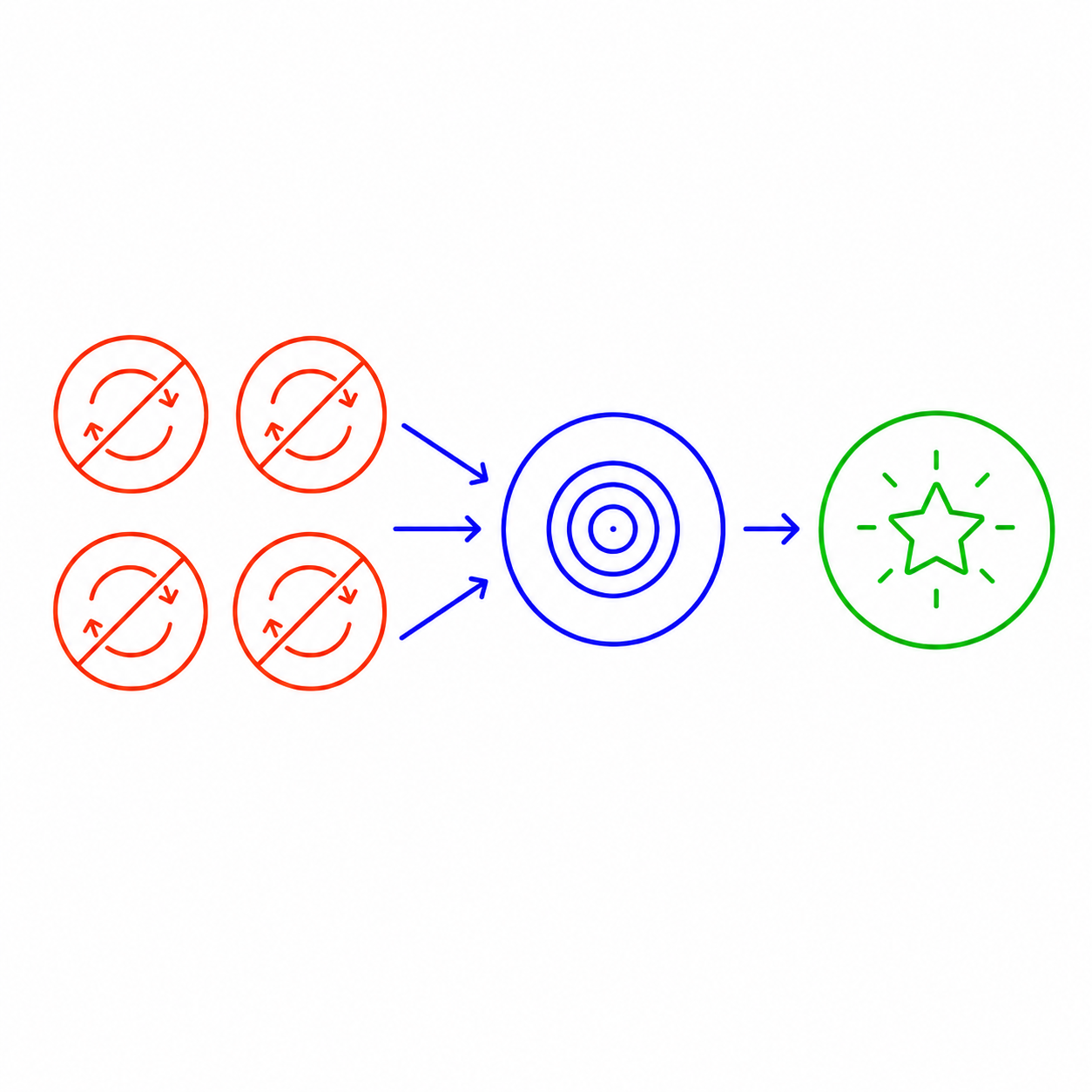
Method 3: A bigger goal
These three methods are just a drop in the ocean compared to everything you can do to get rid of unwanted habits. You can find many other ways in books, articles, and videos, but in my opinion, the best thing is to study your own behavior and test your own personal methods. And if you have some, be sure to share them with me!